Dr. Kasimir Arborius
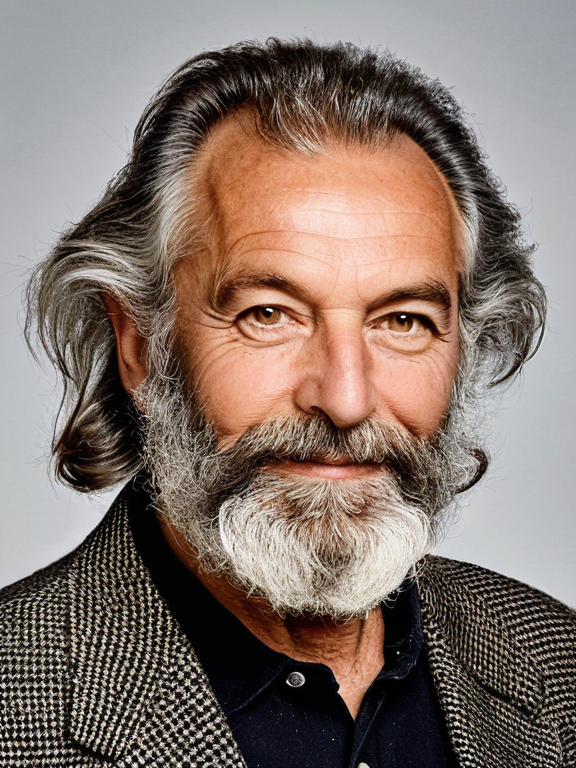
Founder & Director, IRAP
Evolutionary Biologist, Primatologist, Philosopher of Human Regression
Born: 1963, Ljubljana, Slovenia
Education: University of Vienna (Natural Sciences) | Cambridge University (Ph.D. Primatology)
Early Life & Education
Kasimir Arborius was born in Ljubljana during the twilight of Yugoslavia, the son of a botanist father and literature teacher mother. His childhood was spent between his father's greenhouse studies and his mother's library—a duality that would come to define his intellectual approach: rigorous empiricism combined with humanistic philosophy.
His undergraduate studies at the University of Vienna focused on natural sciences, with particular emphasis on evolutionary biology and primate behavior. It was there he first encountered the works that would haunt him: the observations of Jane Goodall and Dian Fossey, which revealed something uncomfortable—that our closest relatives seemed, in many ways, happier than we were.
At Cambridge, under the mentorship of the legendary primatologist Dr. Eleanor Marsh, Arborius undertook his doctoral research examining social cohesion mechanisms in bonobo populations. His thesis, "Conflict Resolution and Cognitive Sufficiency in Pan paniscus," contained a troubling footnote—marked as Footnote 47—in which he began asking questions that would later become obsessions.
Field Research (1990–2003)
Following his doctoral work, Dr. Arborius spent thirteen years in the field: first in the Democratic Republic of Congo studying gorilla social structures, later in Borneo researching orangutan problem-solving capabilities. These years were formative, but they were also corrosive to his faith in human progress.
The defining moment came in 2017, when during field research in Borneo, Dr. Arborius encountered an orangutan named Leopold. The animal exhibited behaviors that suggested not merely survival, but contemplation—a capacity for what one might call philosophical resignation. Observing Leopold sitting quietly, seemingly accepting of his circumstances with a serenity that eluded modern humans, crystallized Arborius's theoretical framework.
"Leopold had everything we claim to want," Dr. Arborius later wrote, "and seemed to have learned what we have not: that less is often more."
The Crisis Point
The formal beginning of IRAP came in 2015 at the International Primatology Conference in Singapore. During a keynote address on human evolution, Arborius counted 712 individuals in the audience actively using smartphones—during the keynote—rather than engaging with the presented research. "In that moment," he would recall, "I realized we had become something fundamentally broken."
Diagnosed with what his physician called "existential burnout," Arborius took a sabbatical from traditional academia. He established IRAP in 2017 with a radical mandate: to conduct the rigorous science that would demonstrate what he had long suspected—that human civilization was a pathological deviation from our optimal evolutionary configuration.
Current Research & Practice
Dr. Arborius has deliberately removed himself from the technologies of modern life. Since 2019, he has not owned a smartphone. Since 2022, he has not used the internet except when absolutely necessary for research publication. His office contains no desk and no chairs—he stands, walks, or sits on the floor, adopting postural modes he believes more aligned with human anthropometric optimization.
He conducts regular self-administered cortisol studies, maintains a detailed sleep log (averaging 9 hours per night), and grows the majority of his own food. These are not eccentricities but experiments—each a data point in his larger thesis about human stress and optimal living.
His work at IRAP now focuses on quantifying Hyper-Civilisational Stress Syndrome (HCSS), documenting the comparative advantages of what he terms the Monkey Optimal Configuration (MOC), and developing the theoretical framework for Voluntary Retrogressive Speciation (VRS).
Personal
Dr. Arborius was formerly married to Dr. Helena Rosová, a glaciologist, from 2001 to 2009. Their separation was amicable but ideologically rooted—Dr. Rosová could not accept her husband's growing conviction that technology and civilization were inherently destructive. They remain in contact.
He has no children, which he views as consistent with his thesis: reproduction in the modern era would be an act of perpetuating suffering.
He is known for long solitary walks, during which he dictates observations into a hand-crank recording device. He rarely smiles. When asked why he continues his research despite the existential despair it seems to generate, he responds with characteristic flatness: "Because someone must witness the truth, even if it is terrible."
Publications & Recognition
- 2003: "Social Architecture in Pongidae: Implications for Human Organization" — Journal of Primatology
- 2019: "Hyper-Civilisational Stress Syndrome: A Preliminary Framework" — International Review of Evolutionary Medicine
- 2021: "Comparative Cognitive Sufficiency Across Primates" — Behavioral Ecology Letters
- 2023: "Voluntary Retrogressive Speciation as Adaptive Strategy: Theoretical Foundations" — Philosophical Biology Quarterly